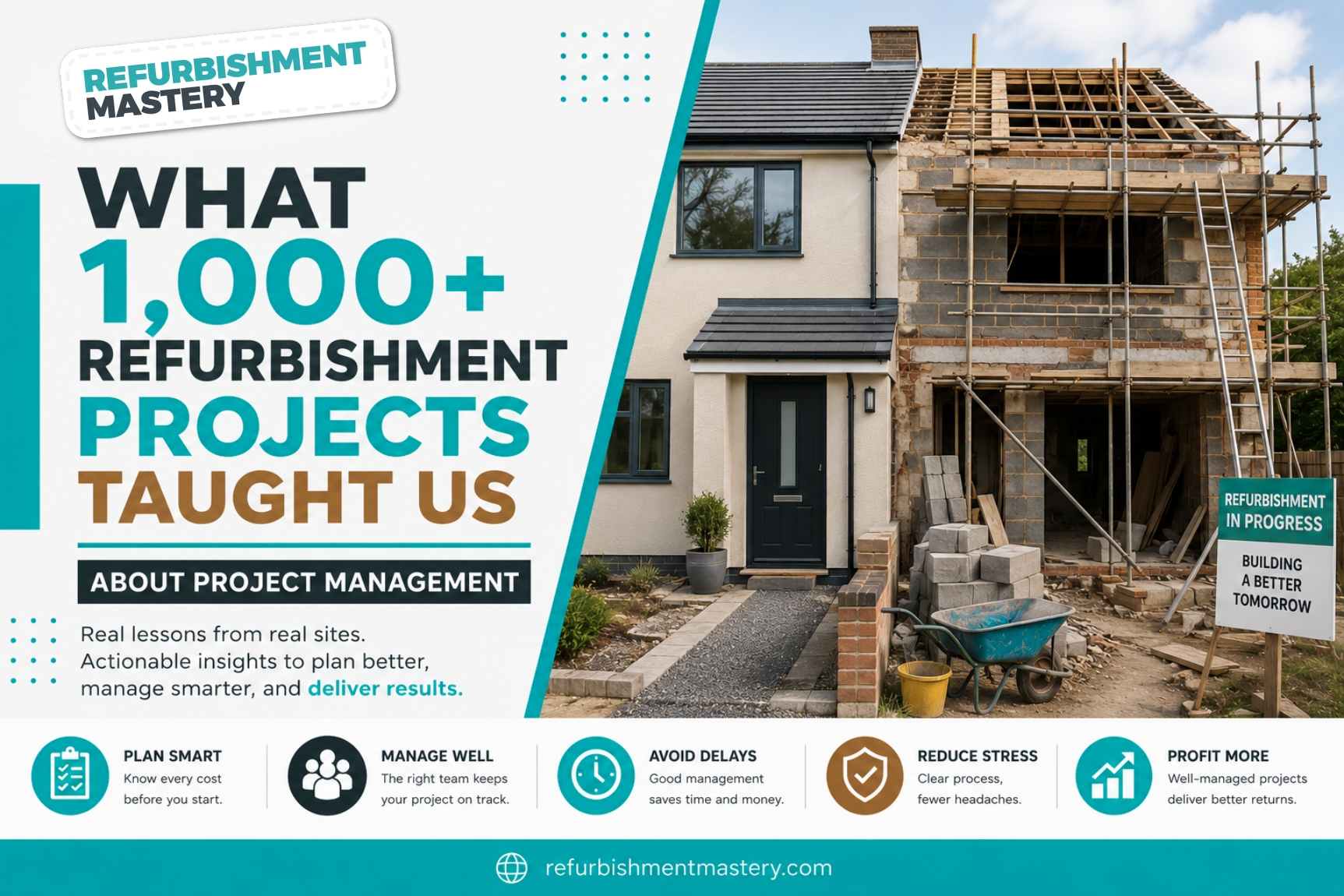
Project Management Lessons from 1,000+ Refurbishments
Managing a single property refurbishment is a challenge. Managing over a thousand is an entirely different beast. After overseeing vast portfolios and navigating every conceivable site complication, we have learned that exceptional property development project management is rarely about luck; it is about establishing robust, repeatable systems.
Whether you are scaling a buy-to-let portfolio, executing complex commercial conversions, or flipping residential homes, the margin for error is razor-thin. True Refurbishment Mastery requires moving away from reactive problem-solving and embracing a proactive, systemised approach. In this article, we share the most hard-won lessons from completing over 1,000 refurbishment projects, giving you the blueprint to deliver your next development on time, on budget, and to the highest standard.
The Blueprint for Refurbishment Mastery: Relentless Pre-Planning
If there is one absolute truth in property development project management, it is that a project’s success is dictated before a single hammer is swung. The most common pitfall for novice developers is rushing the pre-construction phase to get trades on site faster.
In our experience, every hour spent meticulously planning saves ten hours of site delays. This means establishing a comprehensive Schedule of Works, securing robust contracts, and finalising structural drawings early. A professional refurbishment plan should also establish the project's scope and budget in detail before work begins. According to the Royal Institution of Chartered Surveyors, precise initial cost estimation and scope definition are the primary drivers of commercial success in construction.
To achieve this level of precision, you must conduct invasive surveys where possible. Do not guess what lies beneath the floorboards. For a deeper understanding of our pre-planning methodologies, you can review our proven frameworks at Refurbishment Mastery.
Mastering the Supply Chain and Sourcing Reliable Trades
A project manager is only as effective as the team executing the vision. Over 1,000 projects have taught us that the cheapest quote is often the most expensive option in the long run. This is part of a wider pattern we see across refurbishment projects, where poor cost control can quickly turn a seemingly profitable investment into an expensive one.
Instead of constantly chasing the lowest daily rate, focus on finding and building long-term relationships with reputable contractors who are right for your project. Aligning yourself with tradespeople vetted by authoritative bodies, such as the Federation of Master Builders, significantly mitigates risk.
Furthermore, material supply chains have become increasingly volatile. To prevent costly downtime:
Order bespoke items early: Windows, structural steel, and custom joinery should be ordered weeks in advance.
Standardise your finishes: Using a standardised catalogue for paint, flooring, and sanitaryware across your portfolio reduces lead times and allows for bulk purchasing discounts.
Keep secure site storage: When possible, have materials delivered just ahead of schedule and securely stored to ensure trades are never waiting on parts.
You can see how we apply standardised finishes across diverse sites by looking at our past successes at Refurbishment Mastery.
Establishing Ironclad Site Communication Protocols
Poor communication is the silent killer of profitability. Assuming that your main contractor sees the vision exactly as you do is a fatal error. We learned early on that regular, documented communication is non-negotiable.
Implement weekly site meetings accompanied by formal minutes. Use digital property development project management tools to track daily progress through photographs and site diaries. This not only keeps the project moving but also provides a clear audit trail if disputes arise. Remember, if a variation to the contract is not documented in writing, it did not happen.
Prioritising Health, Safety, and Quality Control
When deadlines loom, and budgets tighten, there is often a temptation to cut corners. However, compromising on health and safety or building regulations can result in catastrophic delays, legal action, and a damaged reputation.
Strict adherence to the guidelines set out by the Health and Safety Executive is not just a legal requirement; it is a hallmark of a professional site. A tidy, safe site is invariably a productive site.
Moreover, quality control should not be left entirely to the end of the project. Implement stage-gate inspections—checking the quality of the first fix plumbing and electrics before the plasterboard goes up. Finding a leak after the walls are plastered and painted will decimate your profit margins.
Bottom Line
Delivering a successful property development is a complex orchestration of time, money, and people. What 1,000+ projects have taught us is that true Refurbishment Mastery is achieved through meticulous pre-planning, vetting exceptional trades, maintaining rigorous communication, and never compromising on safety. By integrating these expert principles into your own property development project management strategy, you will transform unpredictable renovations into a highly systematised, profitable business model.
Are you ready to see these high-level property development strategies implemented in the real world?
Stop guessing and start systemising.
