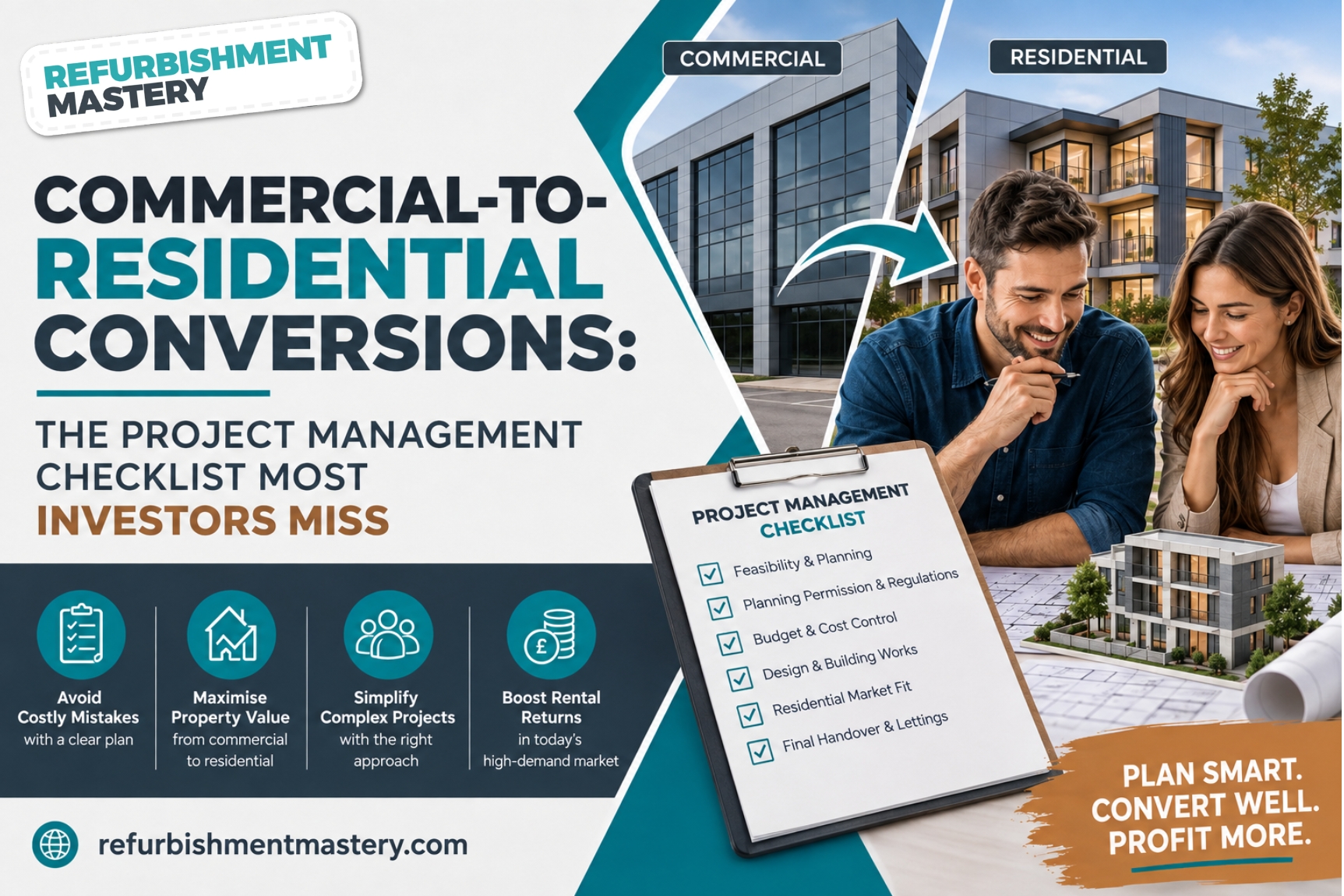
Commercial Conversion Project Management Checklist
Tackling a commercial-to-residential conversion is one of the most exciting ways to add serious value to your property portfolio. However, it is certainly not a game for the faint-hearted. With tighter margins, rising borrowing costs, and strict legislation like the Building Safety Act to navigate, the old days of simply "winging it" on site are well and truly over. To succeed today, you must treat your development like a professional business operation. Implementing a robust accelerator project management framework from day one is the absolute best way to protect your profit and your sanity.
Here is the essential checklist that most investors completely overlook when managing larger conversions.
Step 1: Start With the End in Mind
Before you even think about swinging a sledgehammer, you need total clarity on your end goal. A surprisingly common mistake is purchasing a commercial building without knowing exactly who the final tenant or buyer will be. As any good mentor will tell you, you must always start with the end in mind.
You must step into the shoes of the end-user to determine exactly what they need, which helps you avoid spending money on things they do not care about. For instance, if you are creating high-end serviced accommodation, you will likely need to budget for fully integrated kitchen appliances. However, if you are targeting first-time renters, you can probably just leave a blank space for a washing machine and skip the dishwasher entirely. Make these crucial commercial decisions before you even finalize the property purchase.
Step 2: Assemble the Pre-Construction Team
Many investors mistakenly believe that managing a conversion simply means hiring a good builder and letting them crack on. In reality, your main building contractor should actually be one of the last people you bring onto your project team.
Long before physical construction starts, a project manager's role is to bring in planning consultants, architects, structural engineers, and building control surveyors. This early planning is a critical part of creating a professional refurbishment plan, helping you define the scope, budget, and requirements before construction begins. Your job is to gather competitive quotes, interview these consultants, and get your structural designs formally approved. If you leave the initial design and compliance up to a builder, you are asking for trouble, as they do not get involved in procuring these early specialist team members.
Step 3: Implement Your Accelerator Project Management Plan
Once your professional team is assembled, you need an accelerator project management system to keep everyone moving forward. This means acting as the central hub—much like the axle in the middle of a bicycle wheel—connecting all the different consultants and tradesmen.
You must set strict targets, such as agreeing exactly when the architect will send their first draft, and then actively following up mid-week to ensure they are on schedule. Furthermore, you must complete a formal commercial risk assessment. This isn't just about site safety; it is about anticipating financial and logistical challenges before they snowball into expensive crises. If your management plan misses these details, your tradesmen simply won't be able to work.
Step 4: Identify Your Management Profile
To manage a complex conversion without losing your mind, you must understand your natural working style. Profiling systems, like the Wealth Dynamics or the free Genius Test, categorise people into four main profiles: Dynamo, Blaze, Tempo, and Steel.
Dynamos are brilliant at starting exciting new projects but often get bored halfway through and struggle to finish them. Blaze profiles are fantastic networkers but are notoriously bad with paperwork and formal contracts. If you try to wing the paperwork as a Blaze, or rush into the build without finalized designs as a Dynamo, your project will suffer.
If you are taking on a big conversion, you ideally need the process-driven traits of a Tempo or Steel profile. These people are naturally grounded, detail-oriented, and excel at tracking budgets and timelines, making them the ideal natural project managers. If that isn't you, you may need to hire someone with those traits to plug your operational gaps, particularly when deciding whether to manage the project yourself or hire a professional project manager.
Step 5: The Refurbishment Mastery Debrief
Finally, the most overlooked step in any major property conversion is the post-project evaluation. Once the final coat of paint is dry, the best project managers always sit down and conduct a full Refurbishment Mastery debrief.
Ask yourself the hard questions: Did we deliver on time? Are there any lingering snags? Did you actually make the profit you originally projected? You might even realise that you bought the building for the wrong price from day one, or that you should have engaged professional help earlier in the planning phase. Evaluating your mistakes ensures your next commercial conversion runs smoothly, predictably, and profitably.
Master Your Next Commercial Conversion
Commercial-to-residential projects do not have to be a source of constant stress or spiralling costs. As Albert Einstein famously suggested, if you judge a fish by its ability to climb a tree, it will live its whole life believing it is stupid; the key is simply playing to your natural strengths.
By recognising your dominant management profile, you can build a balanced, highly effective team that perfectly compensates for your personal operational weaknesses. Whether you are a big-picture visionary or a spreadsheet-loving organiser, your ultimate responsibility is to ensure the right systems and people are in place from the very beginning.
When you take the time to assemble your professional consultants early, rigorously track your targets, and honestly evaluate the final results in a comprehensive debrief, you naturally eliminate the chaos from your developments. Stop relying on guesswork, embrace structured management, and start treating your property conversions like the serious, profitable businesses they are meant to be.
