Property Project Manager and Contractor Explained
When stepping into property development or a major refurbishment, it is very common to mix up key professional roles. A frequent assumption made by property investors is that their builder can simply handle the project management duties alongside the construction work. After all, if the builder is on site every day managing trades, why not let them oversee the whole operation?
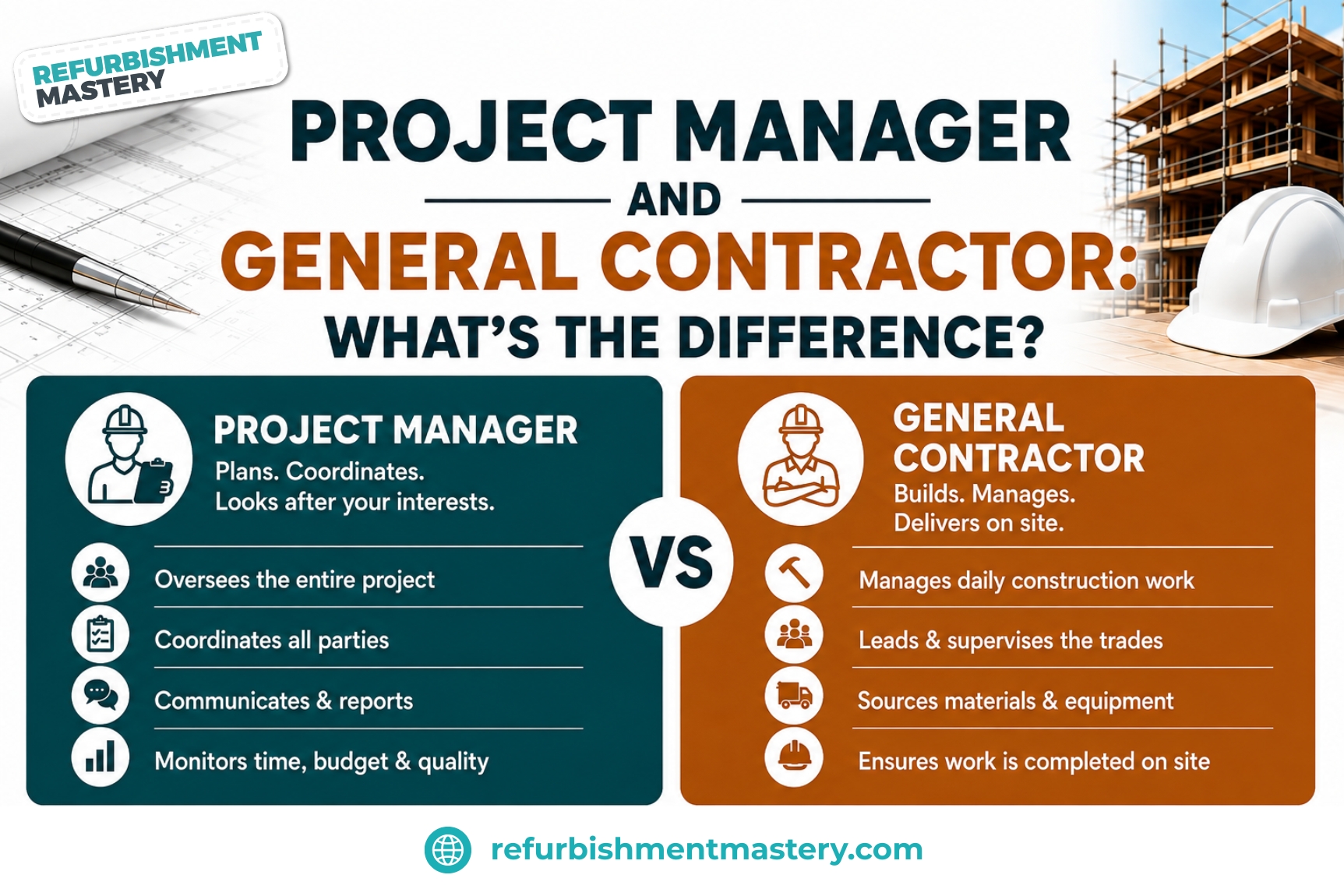
Understanding the distinction between a project manager and contractor is essential if you want to avoid expensive delays, communication breakdowns, and poor decision-making. While both roles are critical to a successful refurbishment, their responsibilities, timing, and perspective on site are fundamentally different.
The Core Roles of a Project Manager and Contractor
To understand how a project functions, it helps to picture a bicycle wheel. The project manager acts as the central axle, while every specialist consultant-the architect, structural engineer, planning consultant, building control surveyor, and contractor-forms one of the spokes connecting to the outer tyre.
A project manager takes a high-level, holistic view of the entire scheme from day one. If you are considering taking on this responsibility yourself, understanding how to become a better property project manager is an important first step. Long before a builder is appointed, a project manager helps establish clear end goals. They identify who the end user will be—whether it is a short-term holiday guest needing fully integrated kitchen appliances or a long-term tenant needing simple, robust utility spaces-and align the development strategy accordingly.
From there, the project manager procures and leads the professional team. They source quotes from architects, structural engineers, and building control surveyors, ensuring everyone meets agreed targets. They also conduct commercial risk assessments, control project-wide communication so team members are not spammed with irrelevant emails, and perform thorough post-project debriefs to evaluate financial returns.
By contrast, a general contractor is a key specialist within that wider team who focuses specifically on physical execution. The contractor steps onto the project much later in the timeline. Their primary job is managing site trades, materials, and day-to-day physical output to turn the agreed architectural drawings into reality.
Why a Contractor Cannot Replace a Project Manager
It can be tempting to cut costs by asking your builder to act as your project manager. However, merging these two functions creates a conflict of interest and leaves huge operational gaps:
Timing and Strategy: A contractor is usually introduced long after you have purchased the property, appraised the target market, and secured design approvals. Because they miss the early strategy phase, they lack a complete understanding of your overarching commercial goals.
Driving Consultants: A project manager coordinates independent specialists and holds them accountable to strict deadlines. Conversely, a contractor views themselves as working under or following instructions from architects and structural engineers, meaning they will not actively drive those consultants to finalize plans.
Strategic Problem Solving: When unexpected site issues arise, a contractor naturally looks for the quickest or cheapest fix to keep their team moving. However, a quick fix might compromise the property's durability over a 20-year holding period. A project manager presents multiple options, weighing up lead times, long-term durability, and overall budget impacts so you can make the right commercial decision.
Accountability and Target Tracking: While a contractor manages construction tasks on site, they do not track overarching business risks. If a contractor falls behind schedule, they rarely flag it early. A project manager tracks progress independently against pre-agreed targets to keep the entire build on course. This kind of structured project management approach becomes increasingly important as the scale and complexity of a refurbishment increases.
Finding the Right Dynamic for Your Refurbishment
When a project runs smoothly, it can sometimes feel like a project manager isn't doing much. In truth, that quiet efficiency is proof that they are steering the process behind the scenes and solving issues before they escalate into costly crises.
Whether you hire an independent professional or manage your own developments using structured frameworks, it is essential to recognize the boundary between a property project manager and a contractor. A contractor is there to construct; a project manager is there to lead. By giving both roles the clarity they need, you protect your profit margins, keep timelines tight, and ensure your development delivers maximum value.
